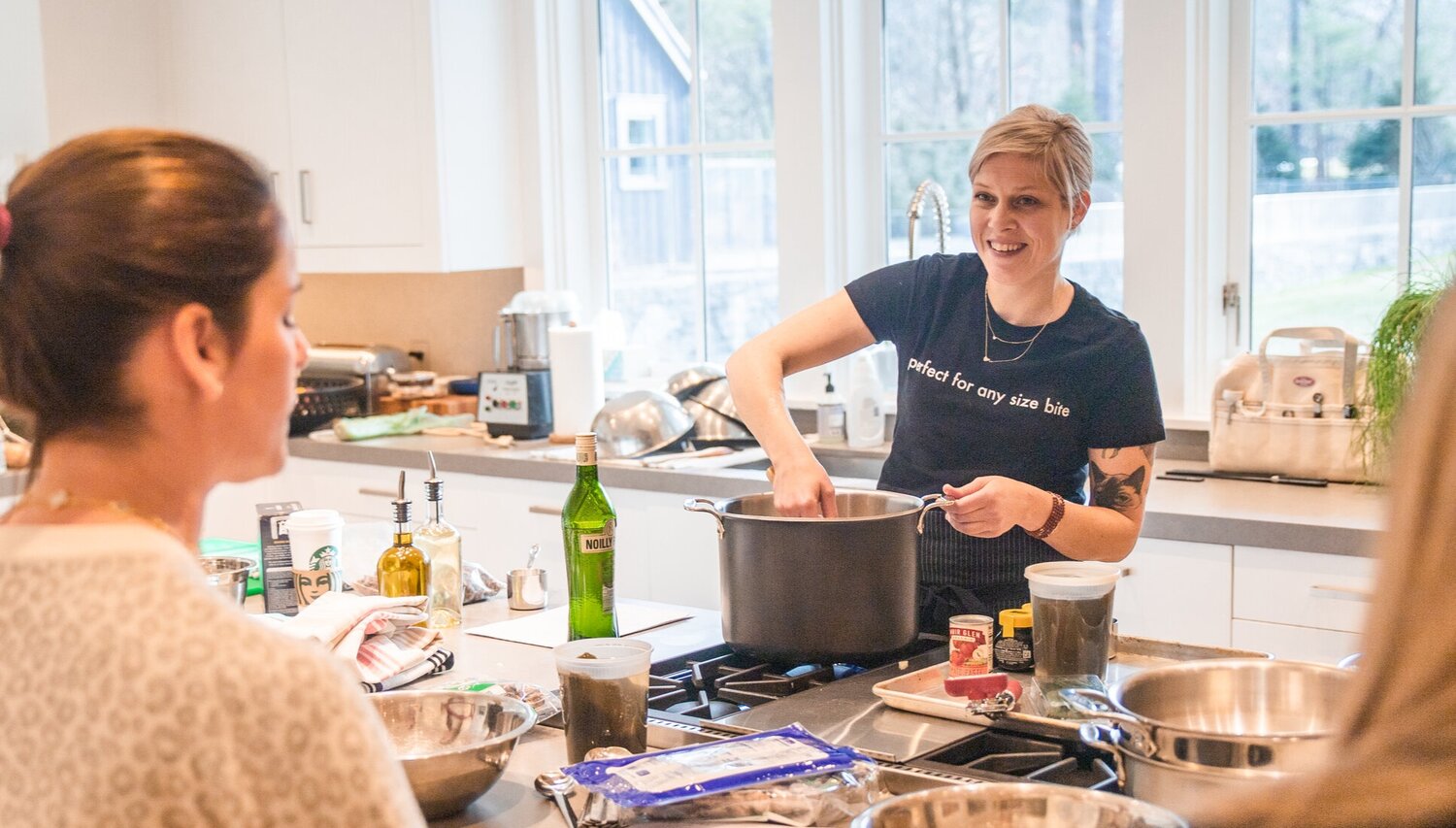

12 Questions to Ask Before You Hire a Personal Chef
Picture the week after hiring a personal chef: dinner is handled, the evenings are yours and nobody is standing at the open fridge at 6:15 asking “so... pasta?” Getting there starts with what you ask first: relevant experience, screening, insurance, menus, dietary needs, responsibilities, costs and communication.
Because yes, the food should be delicious. But you’re also inviting someone into your home, where the oven has a personality and the drawer marked “miscellaneous” could qualify for federal disaster relief.
These twelve questions cover each one for recurring household cooking, and the answers show what an ordinary week together looks like, right down to who washes the pan.
1. What experience do you have cooking for households like mine?
Look for experience cooking around household routines, food preferences and the kind of recurring help you want. Restaurant experience tells you something about a chef's skills. Ask how those skills translate to a home where lunch happens between meetings and three people eat dinner at different times.
Request an example of a typical menu and, where available, references from clients with comparable needs. A useful reference can describe reliability, communication and how the chef handles feedback.
If you hire a chef directly, you choose the chef, so ask for a bio and past experience. If you hire Tiny Spoon Chef, you can skip that step: we match you with a Chef BFF, so nobody is scrolling through profiles at 10 p.m. Either way, ask the question that no bio answers: what happens on the Wednesday somebody announces they now hate rice?
For the full hiring journey, from finding chefs to ongoing service, see our guide to hiring a personal chef.
2. What checks happen before a chef enters a client home?
Ask what screening happens, who conducts it and how references and work history are verified. If a company matches you with a chef, ask the company to explain its process. If you're hiring independently, ask the chef what information and references they can provide.
"Vetted" is a starting point, not an answer. A reference check, an interview and a background check answer different questions; one word shouldn't do the work of all three.
Good answers name the actual steps and what each one covers. Follow up on anything unclear before making access arrangements.
3. What insurance covers the work in my home?
Liability insurance relevant to cooking in your home should come with documentation that confirms current coverage. Our advice: request proof of current coverage in writing before the first visit. A good chef will expect the question, and the American Personal & Private Chef Association lists liability insurance among its recommended hiring questions.
Also ask who holds the policy and whom to contact if an incident occurs.
A statement that a chef is "fully insured" doesn't explain the coverage, its limits or whether it applies to the work being booked. Get those details before the first visit.
4. How will menus reflect what my household actually eats?
Ask how the chef learns your preferences, dislikes, portion needs and schedule, then uses that information to plan menus. A sample menu helps, but so does a specific question: what happens when everyone likes the dish except the person who eats half the food?
At Tiny Spoon Chef, we build Core Service menus around household tastes and routines, with family-style or individual portions available. That's a practical distinction when one person wants lunch packed and another wants dinner whenever the laptop finally closes. Your chef keeps learning, too: tell them the kids dislike green bell peppers, and they stop buying them.
Mention the small things. Cilantro hatred counts. Nobody needs to spend Tuesday defending their position on soap leaves.
5. How do you handle dietary needs and explain your limits?
Discuss dietary needs before booking, including the difference between food preferences, intolerances and allergies. Ask about experience with the specific need, how ingredient information is checked and how the chef approaches cross-contact: the unintended transfer of an allergen between foods or surfaces.
Ask what the chef can accommodate and what falls outside their capabilities. An answer should describe the process and its limitations; a blanket assurance that everything will be fine does neither.
Experience with vegetarian or dairy-free cooking, for example, does not establish that a chef can manage a shellfish allergy or a medical diet. Name the specific need and ask how the chef would handle it.
6. What does the service include, and what will I still do?
The service should spell out whether it includes menu planning, grocery shopping, cooking, portioning, labeling and kitchen cleanup. Then ask what happens at mealtime: will you simply plate the food, or finish a component yourself?
For Tiny Spoon, cooking and cleanup happen during Chef Day, the recurring in-home visit. The personal chef meal prep guide explains that arrangement in more detail.
Also ask where cleanup stops. Pots, pans and cutting boards from the cooking are one thing; the dinner plates, glasses and stray fork that follow are another. Settle it early, while everyone is still polite.
7. How is the total cost calculated?
Ask for the service charge, grocery costs and any additional charges, with an explanation of how extra time or requests affect the total. Compare quotes covering the same work and frequency.
Find out who approves changes, how grocery spending is agreed and what records you'll receive. Grocery transparency is simple at Tiny Spoon: the cost is passed through, and the receipt stays with you. Every item the chef bought is on the receipt.
Discuss priorities early: favorite ingredients, shopping preferences and a comfortable grocery budget. If the household goes through avocados like they're free, mention it now, before the receipt does.
8. What kitchen setup and access arrangements are needed?
Ask what kitchen setup and access arrangements the chef needs. On the kitchen side, that means equipment, counter and refrigerator space, what the chef brings and what the household should have available. Describe your kitchen as it is, quirks included, so the chef plans around the real one from the first visit.
Agree on arrival arrangements and whether you'll be home. Tiny Spoon clients do not need to stay home for every Chef Day, but access details still need a direct conversation. The first visit starts with a kitchen tour, and your chef asks before using anything that belongs to you.
Mention anything that affects the visit, including pets and working from home. The dog will have opinions about a stranger carrying raw chicken through his kitchen. Plan the introduction, or he will conduct his own interview.
9. What instructions will help me use the meals?
Ask how meals will be portioned and labeled, how to store them, which to eat first and what finishing or plating instructions you'll receive.
We leave a menu sheet with finishing or plating instructions. A sauce might be ready while pasta waits for you to boil it fresh. Our labels are dissolvable, not masking tape, so the fridge stays organized and the containers stay clean. If you'd rather not boil the pasta yourself, say so during planning.
A fridge full of food is much more useful when dinner doesn't feel like a mystery basket round on a cooking competition: three minutes, no instructions, good luck.
10. Will I have the same chef, and what happens during an absence?
A recurring service usually means the same chef returns, so ask how matching works and what happens during an absence, whether the chef or the household is unavailable. Clarify how changes are communicated and whether an alternative visit or chef is possible.
Tiny Spoon's Chef BFF relationship gives a recurring chef the opportunity to learn the household over time.
Continuity and backup arrangements are separate questions. A chef learning your week is not a promise that someone's always available, and the agreement should say which one you're getting.
11. How do I give feedback when something needs to change?
Ask how to share feedback and how it affects the next menu. Tiny Spoon settles menus about 48 hours before each visit, so feedback has a clear place to land: the next one. Describe a small scenario: the portions were too large, one dish went untouched or lunch needs to travel better. What would the chef change?
The answer should explain how to communicate and how adjustments happen.
Nobody needs to enter a hostage negotiation over quinoa. If a grain has spent three consecutive days being politely relocated around the fridge, the chef needs that information.
12. What are the terms for changing, pausing or ending service?
Written terms should cover notice periods, cancellations, schedule changes and any associated fees for changing, pausing or ending service.
Check whom to contact and how a change is confirmed. Discuss what happens if the chef needs to cancel, too.
What to Do With the Answers
Put the answers side by side. The best fit is the chef whose answers are specific, consistent and easy to repeat back, not the one with the longest list of credentials.
A few mistakes are easy to avoid:
- Accepting a vague answer. "We take care of everything" is a slogan, not a policy. Ask what "everything" includes.
- Comparing quotes for different work. Match the frequency, inclusions and grocery arrangement first, or the numbers mean nothing.
- Skipping the written terms because the call went well. The agreement is what you'll rely on in month three.
- Saving the awkward questions for later. Allergies, access and cancellation are easier to discuss before the first Chef Day is on the calendar.
How the chef answers matters, too. Plain answers and stated limits show what working together will feel like.
Now that you know what to ask, you can run the search yourself or skip to the good part. Tiny Spoon Chef handles the matching, and the Chef BFF we pair you with handles the razzle-dazzle. Jazz hands are optional. Book a consult with Tiny Spoon Chef and bring all twelve questions. The cilantro grievances are welcome, too.