
Back to School Without the 6 PM Scramble: A Chef's Weeknight System
Getting dinner on the table at 6 PM during the school year involves more than cooking. There's the planning, the shopping, and figuring out what works around everyone's schedule. Someone has practice, someone is stuck in traffic, the fridge is a negotiation, and nobody has one more dinner decision in them. Five Tiny Spoon chefs, who cook in family kitchens regularly, show how they take that mental work off a family's plate. It comes down to three things: a week planned around real evenings, cook once eat twice meals that turn one preparation into two different dinners, and a fridge-to-table routine that asks little of a tired household.
Chef Tyler puts the goal this way: "I want families to open their refrigerator and feel like dinner is already taken care of, regardless of how hectic their day has been."
A School Week at a Glance
These are four evenings from Chef Tyler's sample week:
| The evening | Dinner | How it helps |
| Tuesday: kids' activity night | Turkey meatballs with marinara, rigatoni, roasted broccolini | Prepared ahead, so it works before or after practice |
| Wednesday: someone gets home late | Slow-braised beef, mashed potatoes, roasted carrots | Can be portioned individually for whoever arrives late |
| Thursday: different tastes at one table | Build-your-own chicken burrito bowls with seasoned rice, black beans, roasted corn and fresh toppings | Everyone customizes their own dinner |
| Friday: the end of the week | Thai coconut curry with vegetables, chicken and jasmine rice | A freezer-friendly dinner for the week's last night |
These four are a sample, not a standard menu or meal count. What carries over is the pattern: the hardest evenings get the dinners that ask the least of the household, and one night puts the choices in everyone's own hands, so nobody has to negotiate with the fridge. Depending on the family, Chef Star makes one night a themed "take out" meal for variety. Chef Ash works with one client who prefers a rotation of favorites to new dishes every week, and they find what works through trial and error.
For the starting point, see our guide to planning a week around your calendar. If you would rather start from recipes, we have more back-to-school meal ideas too.
Cook Once, Eat Twice Meals: One Prep, Two Different Dinners
Cook once eat twice meals work when one preparation becomes two dinners that feel like different meals. Separately from the sample week, this is one chicken with a very good second act. Chef Tyler roasts a larger batch of simply seasoned chicken. One night it becomes a Mediterranean-inspired bowl with lemon-herb rice, roasted zucchini, cucumbers, tomatoes and tzatziki. Later it becomes a Mexican-inspired burrito bowl with smoky seasonings, cilantro-lime rice, black beans, corn and salsa. "Although the protein is the same," Tyler says, "the flavor profiles and supporting ingredients make them feel like two different dinners."
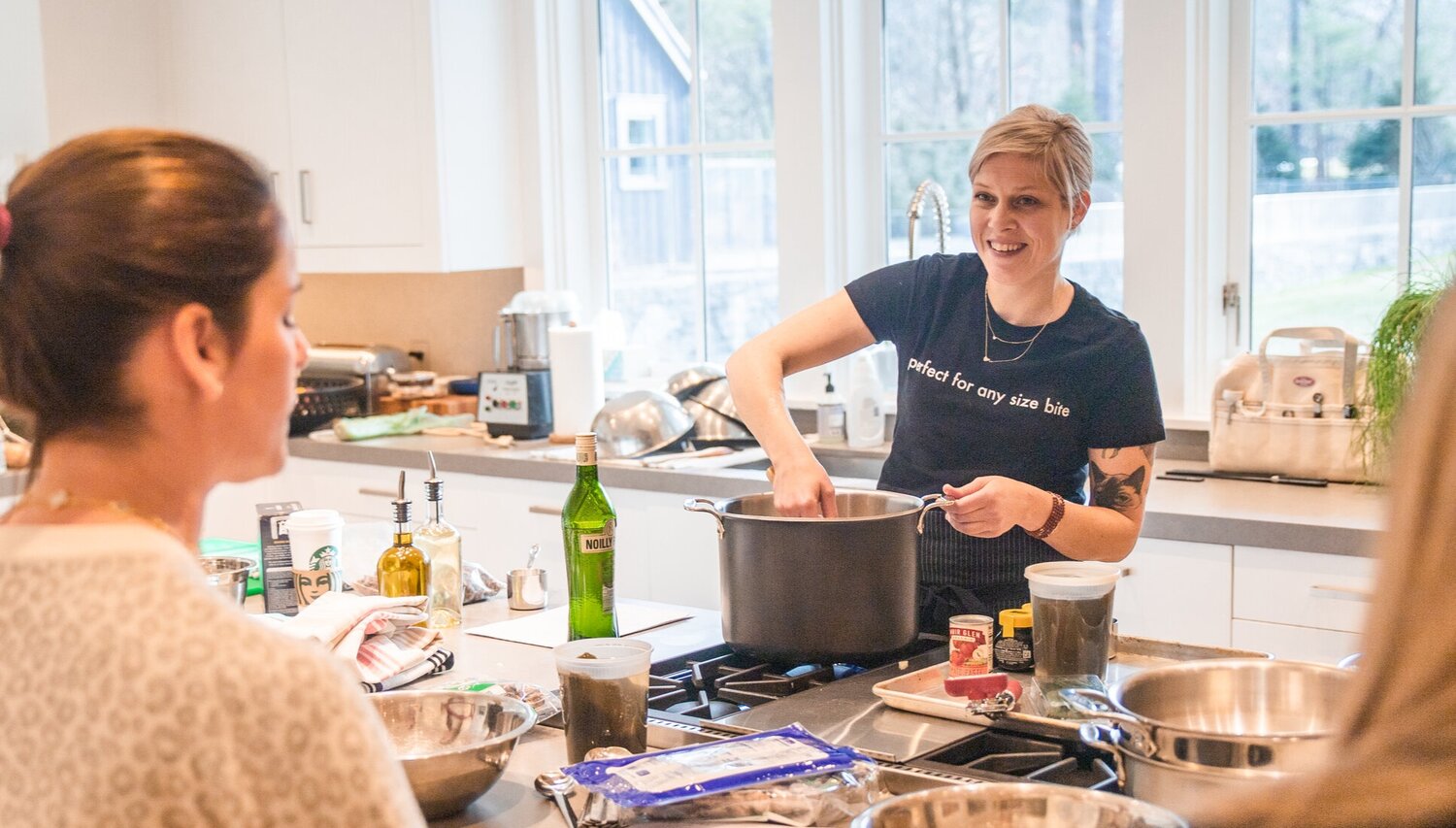
Both dinners are prepared and portioned on Chef Day, aka the best day, when the chef shops, cooks, labels and cleans in the client's kitchen. The second dinner might then need only about five minutes of hands-on work from the family.
Here are five ways our chefs reuse ingredients or preparation work:
| Chef | Prepared once | Used for |
| Tyler | Roasted chicken | A Mediterranean-inspired bowl, then a Mexican-inspired burrito bowl |
| Lenora | Shredded chicken | Chicken enchiladas, or Mediterranean grain bowls |
| Ash | One marinade for chicken breast | Autumn Grain Bowls and Florentine Pasta |
| Emily | Rice | A saucy dish, then crispy rice |
| Star | A batch of diced chicken | Pasta, soup, salad, chicken salad or a dip |
Chef Lenora says, "The chicken is already cooked, but the sauces, seasonings, and sides make the meals completely different." Chef Ash seasons for both dishes at once: "I marinated them together with seasonings that suited both: evoo, garlic, oregano, parsley, and lemon."
From Fridge to Table: What Happens at 6 PM
Chef Tyler's busy-night example gets from the fridge to the table in roughly 12 to 15 minutes, depending on quantity and equipment, with only 4 to 5 of those hands-on. The example is turkey meatballs with marinara, rigatoni and roasted broccolini. On Chef Day the chef has already made the meatballs and sauce, cooked the pasta and roasted the vegetables, then portioned, packaged and labeled everything with finishing instructions. When the family gets home:
- Take the containers out of the fridge.
- Put the meatballs and marinara in a covered microwave-safe dish and heat them through, stirring as needed.
- Warm the pasta with a small splash of water so it doesn't dry out.
- Warm the broccolini.
- Plate everything and finish with freshly grated Parmesan, if you like.
Cleanup is light, with no cutting boards, raw proteins or stack of pots to wash. The dishes go in the dishwasher, and the sink stays suspiciously calm.
How much of that a family does is a choice. Chef Star says, "When I'm first introduced to a family I ask how involved they want to be in the process." For the busiest families, the answer is a slow-cooker dinner that is ready when they walk in, with accompaniments to grab and a ladle to serve.
Chef Emily describes one client's first few weeks. The client said how much physical fatigue had come off her plate, and because dinner is now so easy to finish, Emily says, "she is more likely to go play with her kids during what used to be meal prep time." The client also fights with her kids less over eating, and "it feels less emotional when they don't love one of the meals."
When the Week Changes: Skipped Dinners and Extra Guests
Extra guests start with questions, and a skipped dinner starts with a conversation. Say a family of four is hosting two more people on a weeknight. Chef Tyler asks how many guests are coming, whether anyone has dietary restrictions, and whether the evening is a casual family dinner or something more special. A good fit might be baked rigatoni with turkey Bolognese, a seasonal salad and roasted vegetables, a dinner that scales easily, with quantities raised to serve six.
Before Chef Day, Tyler confirms the headcount, the menu and the portion sizes, and tells the client the grocery bill will reflect the extra people. Sometimes the answer is bigger portions of a dish already on the menu. Other times it is a different dish entirely. Chef Emily sometimes turns one meal into a baked good or a dip, which gives more time to prepare the extra portions and leaves a treat out for guests.
A skipped dinner gets the same kind of conversation. Chef Star says, "I encourage my clients to message me if they need extra ideas or if something comes up." Chef Lenora helps clients decide which meals to eat first and which can wait. If a family's schedule has turned unpredictable, Tyler adjusts future menus to fit.
What Gets Easier After a Few Weeks
After a few weeks, a chef already knows what you would otherwise have to explain. Chef Emily reads the kitchen: "They did not have to tell me they love BBQ, the four sauces in the fridge do." The multiple cans of tomatoes in the pantry say tomato sauce is a staple, and a bunch of bananas on the counter says the kids love them. Emily keeps sauces on the side, too, so each person can add as much heat as they like.
Chef Lenora's lesson came from a meal plan that didn't land. One family started with fully composed, grab-and-go meals, and the food wasn't getting eaten. When Lenora asked, the answer was that the kids preferred their food not to touch. In other words, the food needed personal space. The fix was a mix-and-match approach, with every item in its own packaging.
That is what a recurring chef changes, in Chef Tyler's words: "Instead of repeatedly explaining their preferences, families can trust that I'm already considering them." If everyone at your table wants something different, our post on different preferences at one table goes deeper.
One Thing to Try This Week
Try Chef Lenora's approach this week: roast one batch of chicken for tacos one night and rice bowls another. "It's a small thing, but it saves time during the week," Lenora says.
Put the second dinner on your busiest evening. Chef Tyler's advice for a Tuesday packed with after-school activities is to prepare a protein, starch and vegetable ahead of time so the evening needs almost nothing from you.
Chef Tyler calls "the mental work associated with planning dinner" one of the biggest things a chef takes off a family's plate. Can we share a secret? You deserve the help. What a Tiny Spoon Chef handles is the planning, grocery shopping, ingredient preparation, cooking, portioning and cleanup, so the fridge you open at 6 PM is one that sparks joy.
Not sure where to start? Take the Dinner Motivation Quiz and tell us how dinner really works at your house.