.png?width=280&height=83&name=TinySpoonLogo--w-registered-trademark%20(1).png)

The Secret Ingredient: How Wine Can Transform Your Home Cooking
Wine isn’t just for the glass, it’s one of the most powerful (and underused) tools in the home kitchen. When used thoughtfully, wine can elevate flavors, enhance aromas, and add layers of depth that turn a simple dish into something truly memorable. If you’ve ever wondered how to cook with wine or searched for how to cook with wine recipes, you’re already on the right track.
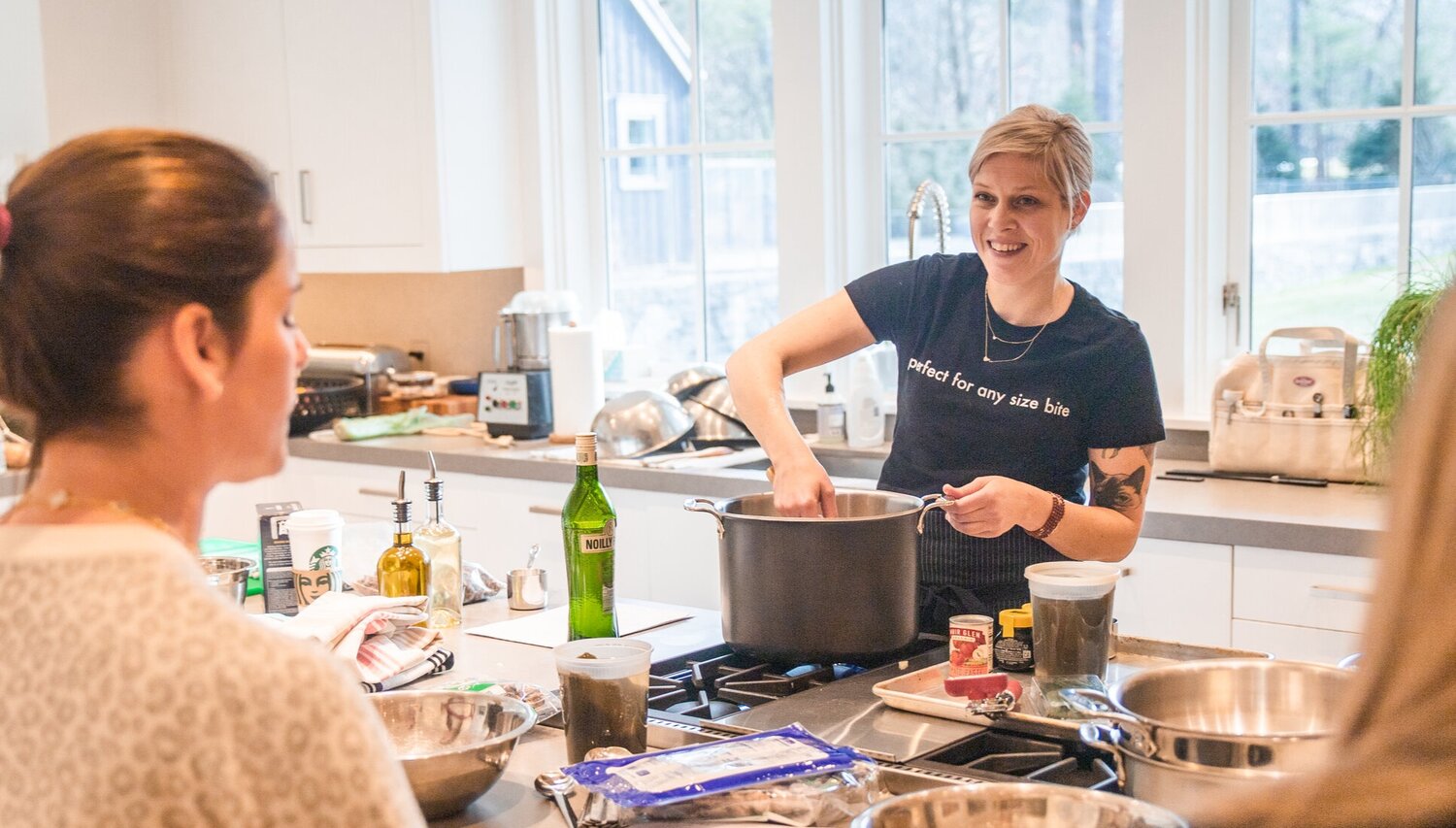
As a Tiny Spoon Chef, I see it all the time: the moment a splash of wine hits a hot pan, the kitchen fills with aroma and suddenly the dish feels restaurant-worthy. If a client happens to be home it always has them asking: “What’s cookin?” (Even though they obviously know because they’ve helped create this fully personalized menu themselves!) Let’s explore how cooking with wine works, how to do it well, what is a good cooking wine, and how you can start using it to transform your everyday meals.
Why Do Chefs Put Wine in Their Food?
Many clients ask me, “Why do chefs put wine in their food?” The answer is simple: balance, depth, and technique.
1. Acidity
Acidity brightens flavors, balances richness, and keeps dishes from tasting flat. This is especially important in creamy sauces, braised meats, and slow-cooked dishes. This acidity also leads to the tenderization of meats when using wine to cook or even just in the marinade. So yes—does wine tenderize chicken? Absolutely. The natural acids help break down proteins, creating a more tender final result.
2. Aromatics
Wine releases complex aromas as it cooks—fruity, floral, herbal, or earthy notes that deepen the sensory experience of a dish.
3. Depth and Complexity
As wine reduces, its flavors concentrate, creating layers you simply can’t get from stock or water alone. This is why wine recipes often taste more refined and complete.
4. Deglazing
Wine helps release all the yummy browned bits from the pan you’ve just seared your protein in (with the help of your trusted wooden spoon, of course).
How to Cook with Wine (Without Overdoing It)
A little technique goes a long way when learning how to cook with wine. Here are a few chef-approved tips:
Use Wine You’d Actually Drink
A common question is: Is it better to cook with real wine or cooking wine?
If it doesn’t taste good in the glass, it likely won’t taste good in your food. You don’t need an expensive bottle—just one that’s balanced and enjoyable.
Add Wine Early for Depth, Late for Brightness
Early in cooking: Wine has time to reduce and mellow, creating richness (great for sauces, stews, and braises).
Later in cooking: A small splash adds freshness and lifts flavors, especially in seafood or vegetable dishes.
Let the Alcohol Cook Off
Give wine time to simmer. This burns off harsh alcohol notes and leaves behind flavor and aroma. Many people ask, How long does it take to boil alcohol out of wine? The length of time depends on how much you’ve added as well as the temperature you’re cooking at. Studies have shown that most of the alcohol is significantly reduced after about 15 minutes of cooking, though trace amounts can remain depending on technique.
The key is not to overpower a dish, but to support and enhance it.
Wine Recipes Simplified
You don’t need to memorize exact rules, just a few guiding principles when exploring wine recipes:
White wines (Sauvignon Blanc, Pinot Grigio, Chardonnay):
Perfect for chicken, seafood, creamy sauces, and vegetables. Think Chicken Piccata or Steamed Clams.
Red wines (Pinot Noir, Merlot, Cabernet):
Ideal for red meats, mushrooms, tomato-based sauces, and hearty stews. Think Beef Bolognese or any hearty protein with a demi-glace.
Dry over sweet:
Dry wines are more versatile and won’t make dishes off-balanced.
And yes—generally speaking, if you cook with a wine, it pairs beautifully with the finished dish. This is called bridging.
What Is a Good Cooking Wine?
This is one of the most common questions I receive: what is a good cooking wine?
A good cooking wine is simply a good-quality, drinkable wine that you enjoy. It should be balanced, not overly sweet, and free of added salt or preservatives. Which brings us to another frequent question…
Is Using Cooking Wine as Good as the Real Thing?
When people refer to cooking wine, they’re often talking about the shelf-stable bottles labeled specifically for cooking. These products typically contain:
- Added salt & preservatives (to extend shelf life but negatively impact flavor)
- Lower-quality grapes
- Unpleasant salty, vinegary, or metallic notes
- Alcohol, but without the purity of real wine
For best results, it’s better to cook with real wine rather than commercial cooking wine. Your dish will taste cleaner, more balanced, and more refined.
Is Using Wine in Cooking Healthy?
Another thoughtful question I hear often is: Is using wine in cooking healthy?
When used in moderation, cooking with wine can offer subtle health-supporting benefits—especially when paired with fresh, whole ingredients and mindful techniques.
Antioxidants That Support Overall Wellness
Wine, particularly red wine, contains antioxidants such as polyphenols and resveratrol, which are known for supporting heart health and reducing oxidative stress. While cooking reduces some of these compounds, a meaningful portion can remain.
Less Need for Excess Salt and Fat
Wine adds acidity and depth, which means you often need less salt, butter, or cream to achieve bold flavor. This helps create meals that are balanced, satisfying, and lighter—without sacrificing taste.
Everyday Dishes Made Better with Wine
Wine doesn’t have to be reserved for special occasions. If you’re looking for practical how to cook with wine recipes, start simple:
- Deglaze a pan with white wine after sautéing chicken or fish
- Add red wine to a tomato sauce for richness and depth
- Finish risotto or mushrooms with a splash of wine for brightness
- Use wine in marinades to tenderize and infuse flavor
These small touches make a big difference
From Ordinary to Extraordinary: The Tiny Spoon Touch
Cooking with wine is about confidence, balance, and understanding flavor—skills that come from experience. Whether you’re exploring wine recipes for the first time or refining how to cook with wine in your own kitchen, the magic is in the details.
As a Tiny Spoon Chef, my role is to bring those restaurant-level techniques into your home, crafting meals that feel indulgent, thoughtful, and effortless.
It’s really the small (some may say Tiny) touches that matter. Whether it’s a weeknight dinner or a special gathering, incorporating wine thoughtfully is one of the many ways we turn everyday meals into extraordinary culinary experiences—so you can relax, savor, and enjoy every bite.
-Chef Brian Mullally